

There are 3 types of bilateral integration:
Symmetrical movements
Using both sides to do the same thing
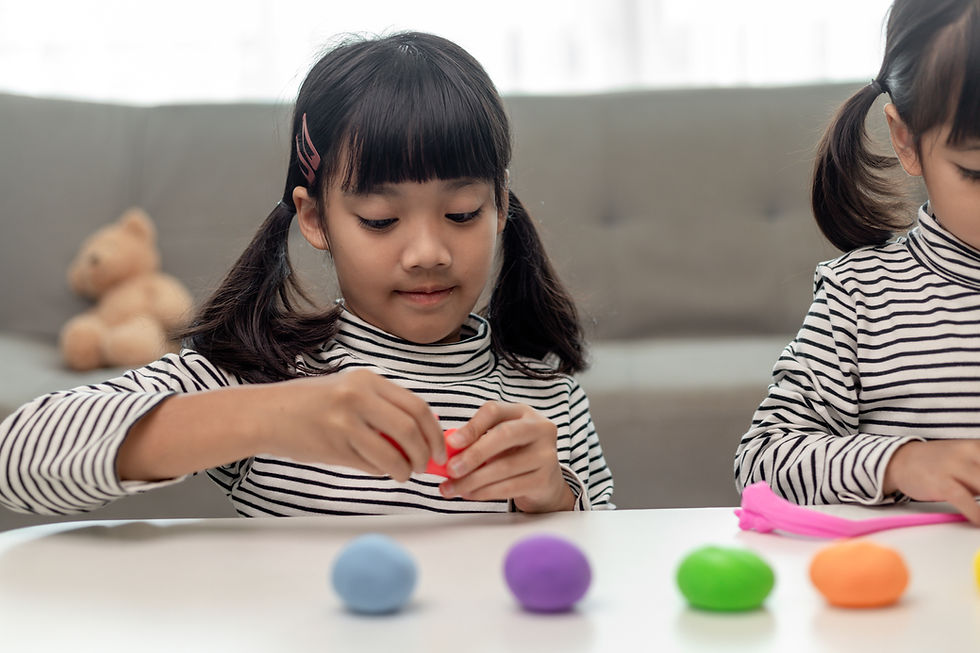
e.g. clapping, jumping, rolling playdough
Alternating movements
Each side takes turns
e.g. walking, climbing stairs
Dominant hand + helper hand
One hand leads, the other supports
e.g. Writing: one hand writes, the other holds the paper, cutting: one hand cuts, the other stabilises, or opening a jar.
Bilateral Integration
Bilateral integration is a concept that refers to the ability to use both sides of the body together in a coordinated way. Bilateral integration is an essential foundational skill required for most activities of daily living, such as dressing, writing, opening things, sports, walking and playing with toys.
You might notice a child has difficulties with bilateral integration if they often switch hands for a task, neglect to use their supporting hand, avoid tasks that require 2 hands, have difficulty using tools such as scissors or appear uncoordinated.
Activities to develop bilateral integration skills
-
Building and construction games - Lego, duplo
-
Arts and crafts - origami, drawing, making cards, sticker books
-
Threading and lacing - sewing, lacing games, jewellery making
-
Playdough - using rolling pins, squeezing with 2 hands, hiding objects in the playdough
-
Ball games - playing catch with 2 hands, bat games like tennis or cricket
-
Card games - holding lots of cards with 2 hands
-
Obstacle courses - climbing over objects, pushing body through tunnels, climbing up ladders, bear walks, crab walks,
-
Riding a bike/trike/scooter - steering the bike
-
Cooking - whisking and mixing, using 2 hands to carry food/put food in the oven
-
Swimming
-
Musical instruments - drums, guitar, flute, recorder, triangle